A commissioned art program for data center campuses and the communities that host them.
A data center is a major, lasting presence in its host community, and communities are looking harder at what they get in return than they were even a few years ago. The economic benefits are real but largely invisible in daily life. The building is not.
A locally rooted art program gives the community a visible, permanent stake in the project. Artists from the host region are commissioned to make significant work for the campus, its edges, and the town itself. The artists are paid and credited. The work stays. Residents see their own region, and its artists, in it.
Data centers are arriving faster than most host communities can absorb them, and developers and local governments are increasingly negotiating community benefit commitments meant to leave those communities something lasting. Yet art still enters these projects piece by piece: a mural here, a grant there, rarely a program that spans the campus, the public realm, and the host community.
A commitment is worth what gets delivered. A commission has a named artist, a contracted fee, an approved design, a completion date, and a permanent result, so what was promised and what was built can be set side by side.
Google showed what art at this scale could look like with its data center murals in 2016. Echo Arts delivers it as one program, and as a durable part of a community benefit commitment.
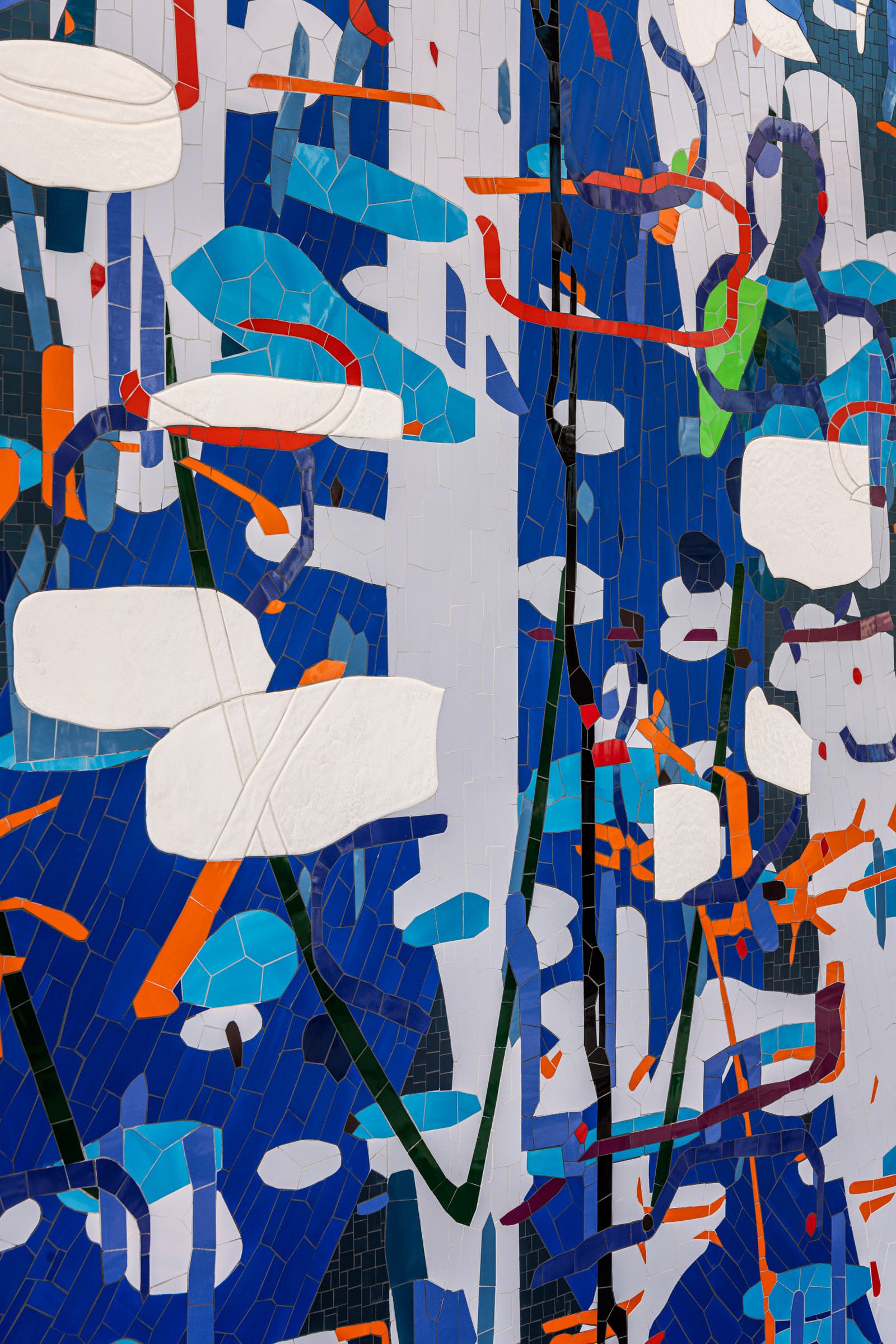
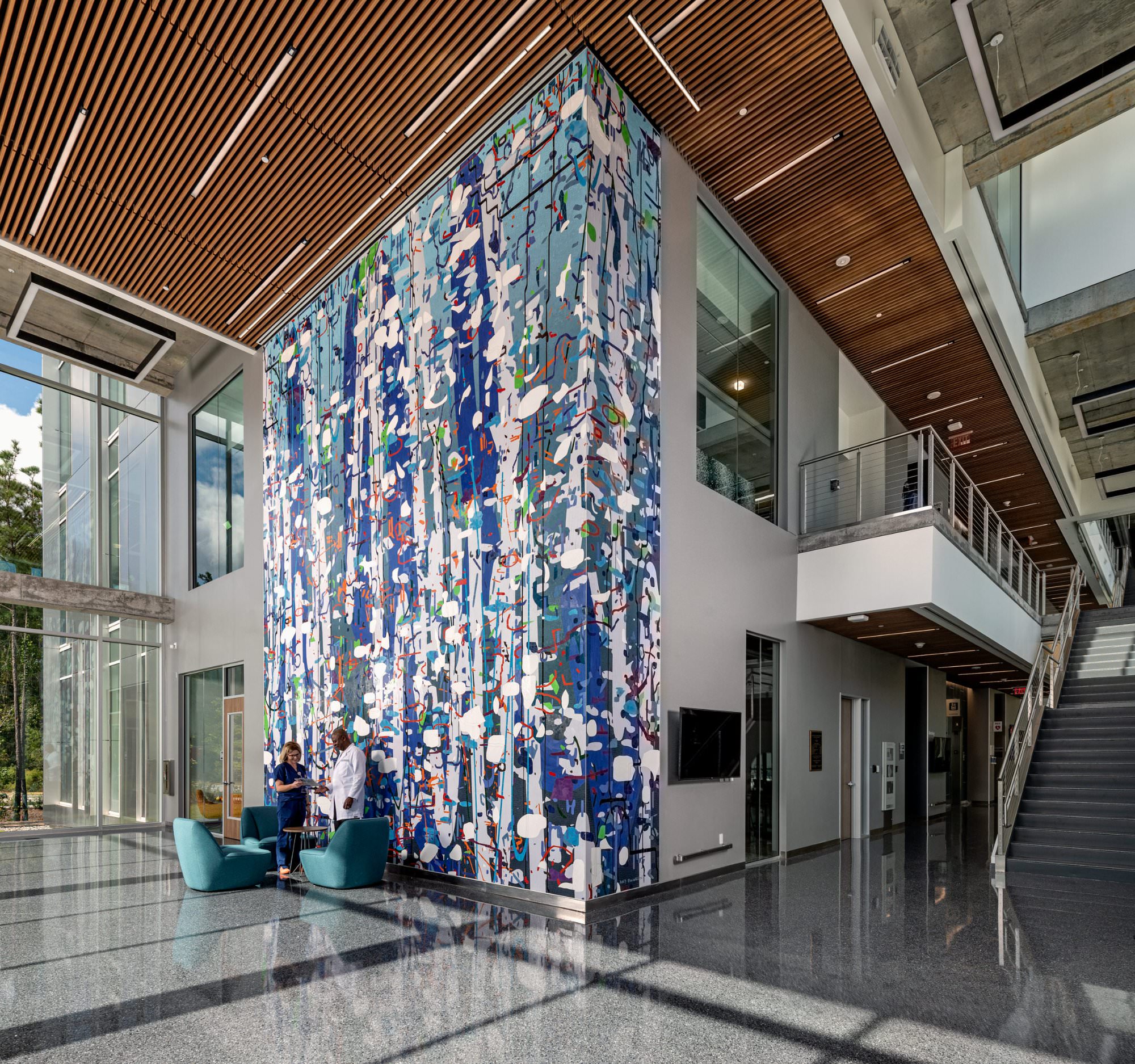
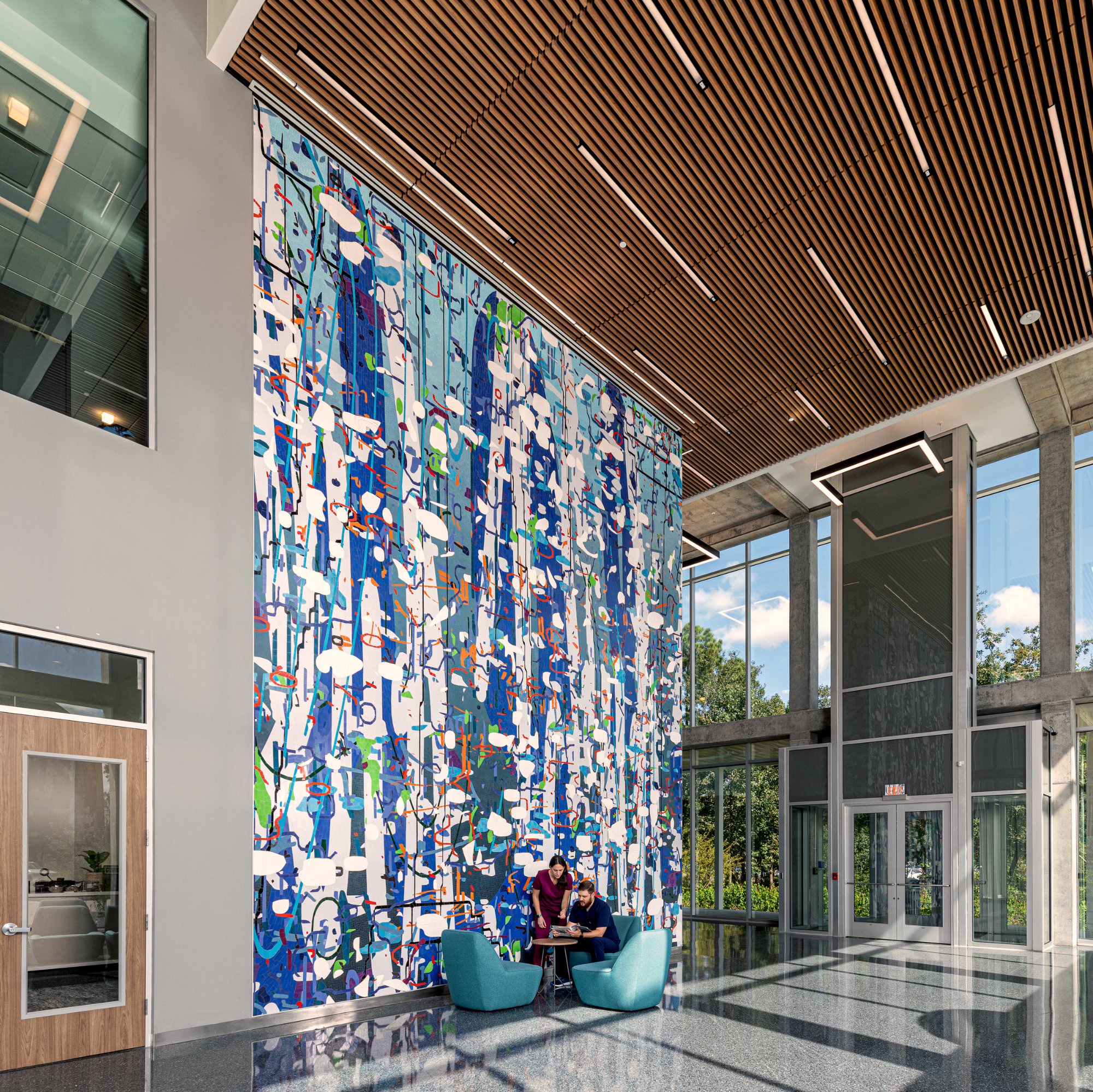
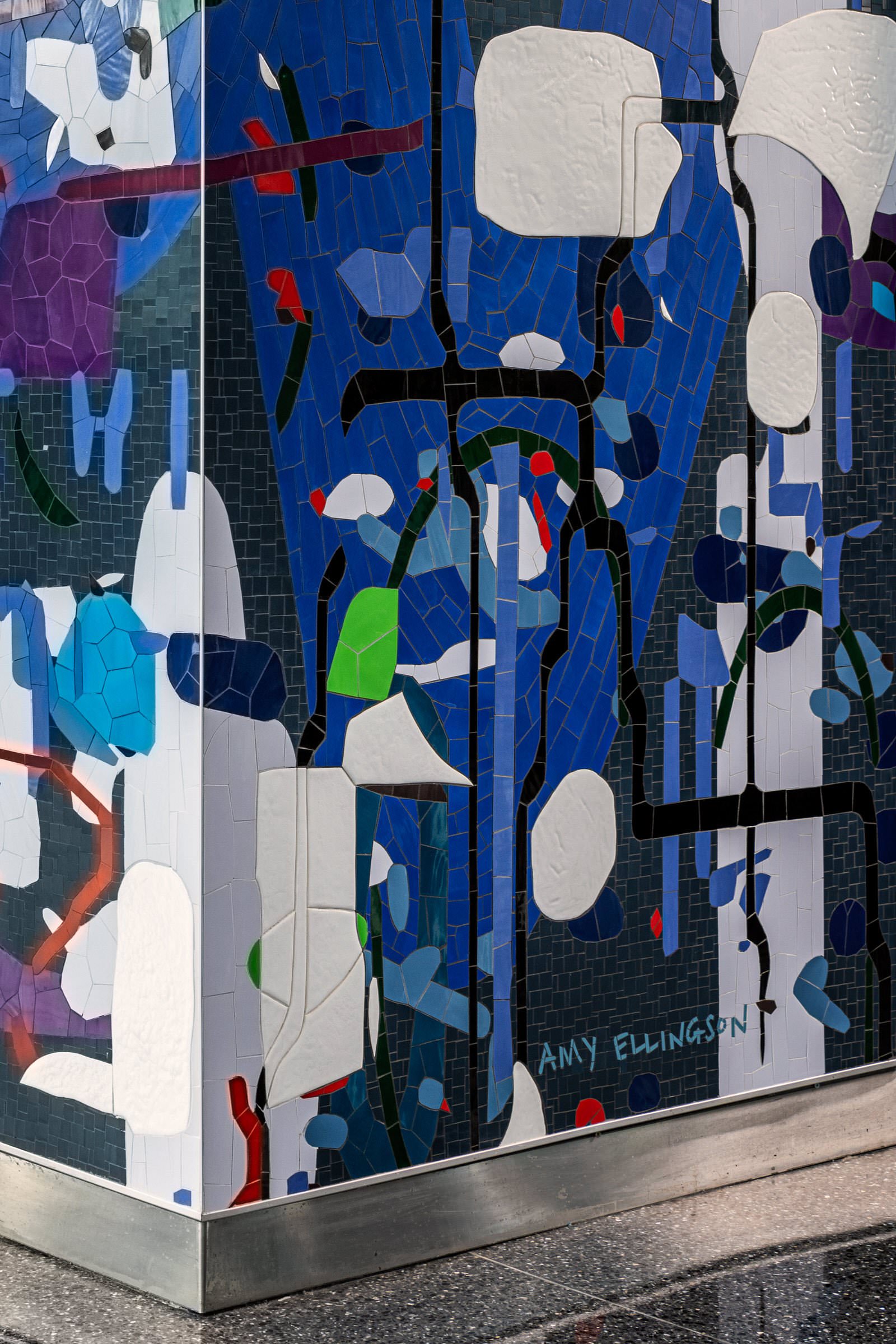
A 26-foot ceramic mosaic that connects three levels of the building's main atrium. Ellingson builds her compositions digitally, manipulating a small vocabulary of simple forms until they become a dense field of information. Mosaika Art & Design in Montreal translated that file into thousands of hand-glazed, hand-cut tiles, assembled on the floor, shipped in sections, then mortared and grouted in place.
Echo Arts guided the commission from artist selection through engineering coordination and installation, with the university, architects, and fabricator at the table throughout, including a 15-month delay caused by COVID-19 travel restrictions.
Software-built image, permanent public work, every coordination step managed.
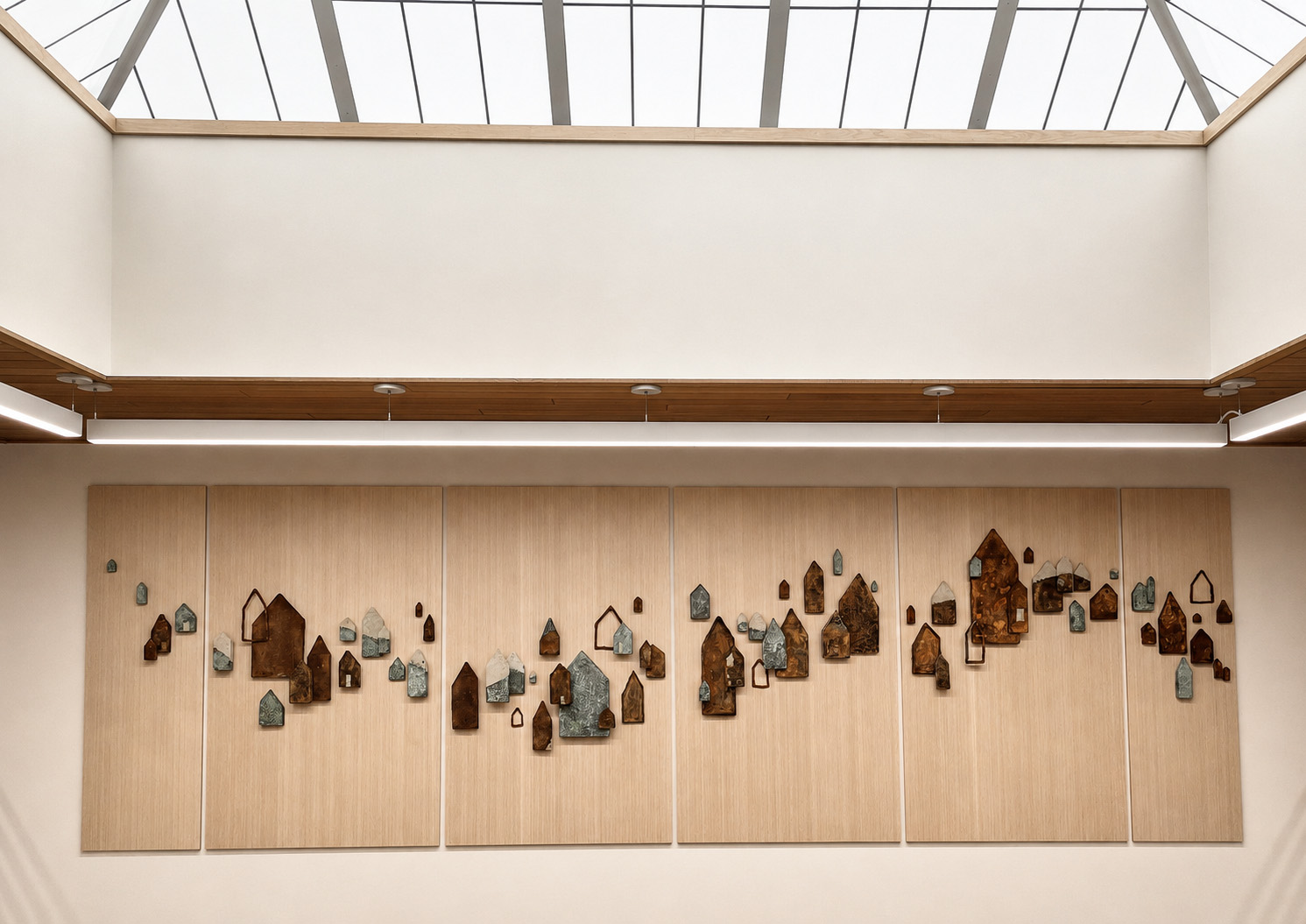
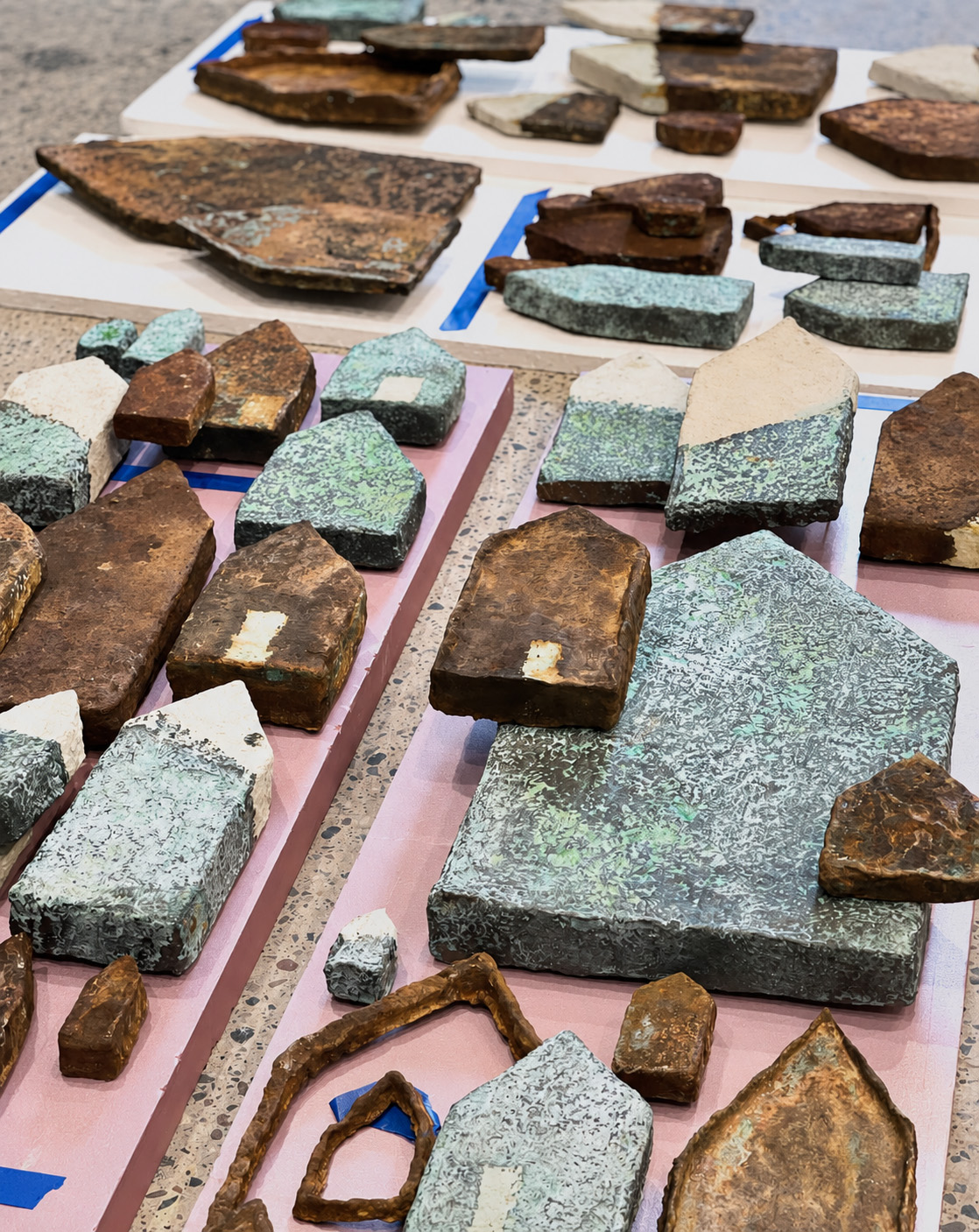
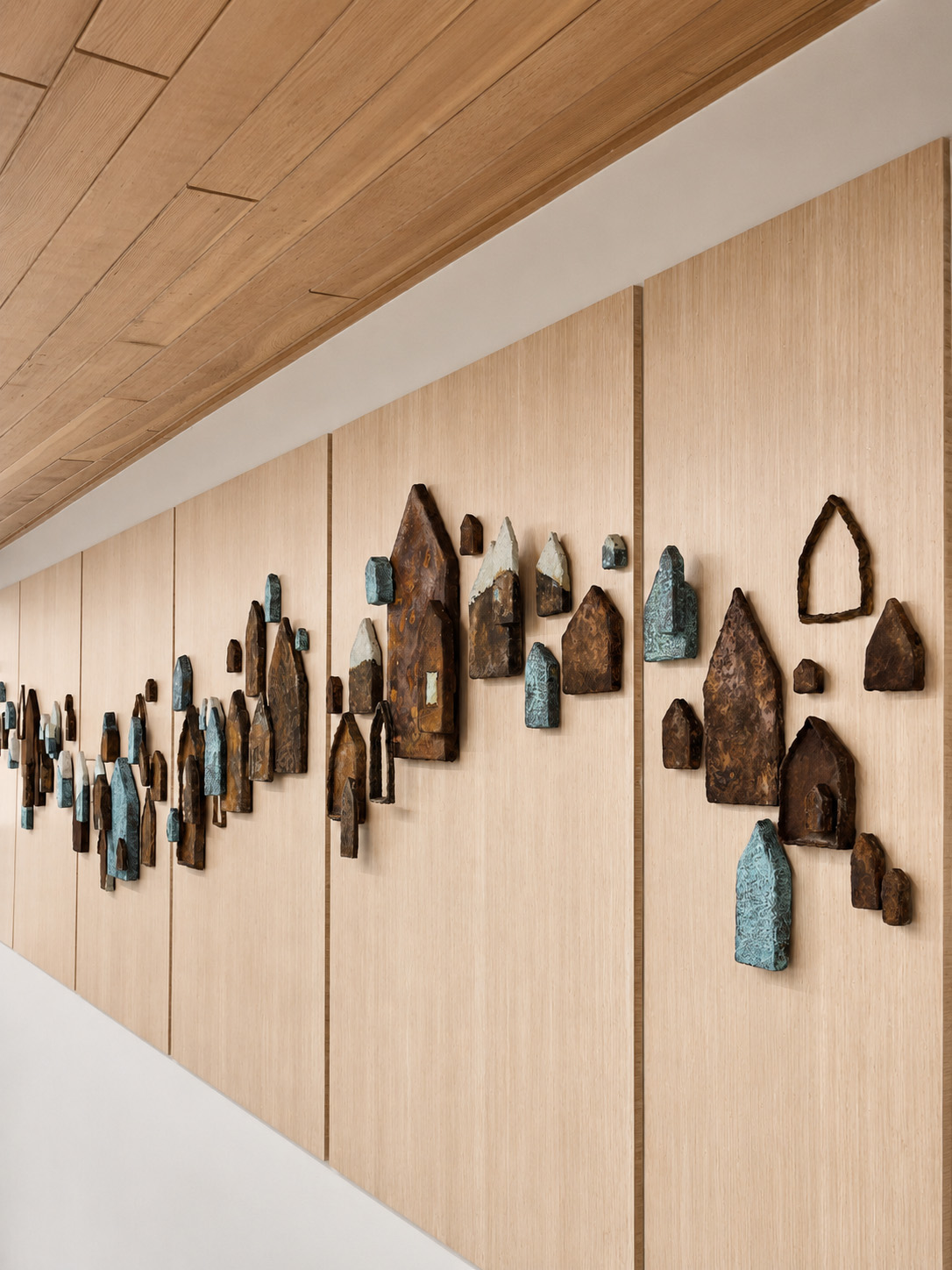
A long horizontal procession of small house forms in ceramic and patinated bronze, arranged across a sequence of oak panels as a skyline of the town outside. Alden lives and works in Bozeman, and the title comes from Thornton Wilder's Our Town. The piece is the town looking at itself, set into a building its residents pass through every day.
The commission came through the city's One Percent for Art ordinance, the civic mechanism closest to how a community benefit commitment works in practice: public money, an artist from the place itself, a building people use for ordinary business, and a work that belongs to the town rather than to whoever paid for it.
An art program does not replace substantive commitments on infrastructure, energy, water, jobs, or environmental impact. It gives one part of that broader commitment a visible, locally authored, and lasting form: something a county commissioner can point to and a resident can walk past.
The right moment to begin is early, while community engagement, site design, and construction planning can still inform one another.
For a campus in planning or permitting, or a community deciding how to spend what a development has already committed, Echo Arts prepares a Community Arts Opportunity Plan: a site assessment, a stakeholder map, candidate commission locations, a survey of the regional artist ecosystem, and a preliminary budget and delivery schedule. It is fixed-fee and fixed-scope, and it becomes the blueprint if the program proceeds.